
A single fake invoice email can do more damage to a small company than a broken laptop ever will. One click can lock up shared files, interrupt card payments, expose customer information, and put a full workday on hold. That is why small business cybersecurity support is no longer something owners can push to the bottom of the list and hope to handle later.
For most small businesses, the real issue is not a lack of concern. It is time, staffing, and budget. You may have a front office manager handling passwords, a vendor who set up the router three years ago, and a few employees using personal devices for work. That setup is common. It is also exactly where risk starts to build quietly.
What small business cybersecurity support should actually cover
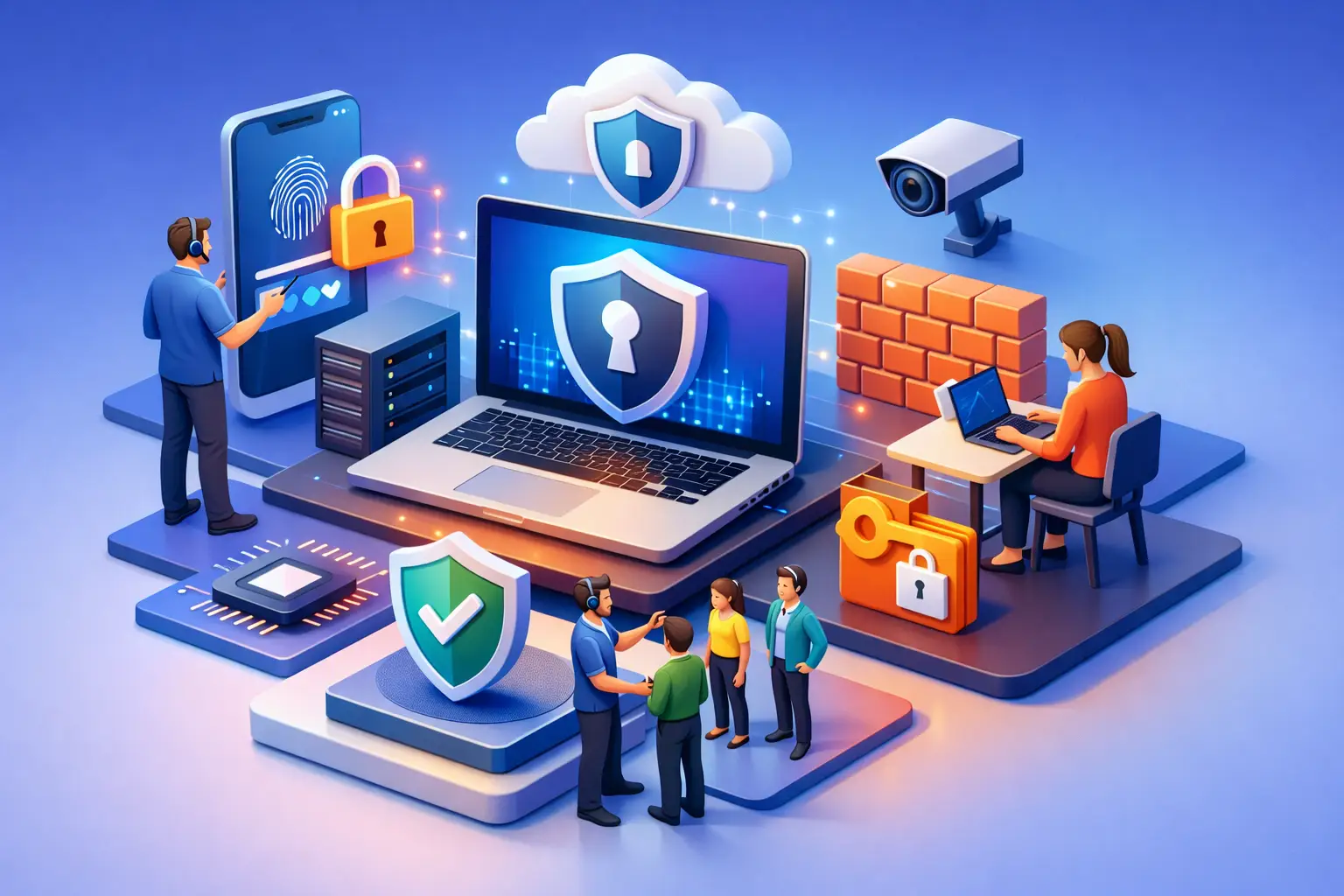
Good security support is not just antivirus on a few PCs. It should protect the way your business actually operates day to day. That includes email, employee logins, workstations, mobile devices, Wi-Fi, cloud apps, file backups, and the network connecting everything together.
For a local shop, medical office, contractor, law office, or retail business, the weak points are usually predictable. Staff may reuse passwords. Computers may miss updates because everyone is busy. Backups may exist, but nobody has tested whether they can be restored quickly. A firewall may be in place, but no one has reviewed whether it is configured correctly for current traffic and devices.
Real support means looking at the full environment instead of treating every security issue as a one-off repair. It also means matching protection to the size of the business. A ten-person company does not need the same setup as a regional enterprise, but it does need more than guesswork.
Why small businesses are common targets
Small business owners sometimes assume cybercriminals only go after major corporations. In practice, smaller companies are often easier to hit because they tend to have fewer internal safeguards and less time to monitor problems early.
Attackers know that many businesses rely on the same email account for invoices, customer communication, and password resets. They know a single employee may have access to banking details, payroll records, and shared storage. They also know downtime hurts smaller companies faster. A larger company may absorb a rough day. A smaller one may lose sales immediately, miss appointments, or fail to process transactions.
That does not mean every business needs expensive security software stacked on top of more security software. It means the basics need to be done well, consistently, and with enough oversight that small issues get caught before they become expensive ones.
The most common security gaps we see in small businesses
Most small business risk is not dramatic. It usually looks ordinary at first. An employee signs in to public Wi-Fi while traveling. A former staff member still has access to email. A backup drive is plugged in, but it has not run properly in months. A computer keeps showing pop-ups, and everyone assumes it is just getting old.
Email remains one of the biggest problem areas. Phishing attempts have gotten more convincing, especially around invoices, shipping notices, password reset prompts, and vendor messages. If your team handles purchasing, scheduling, or customer records through email, one mistake can spread quickly.
Password habits are another issue. Shared logins, weak passwords, and missing multi-factor authentication create easy openings. These are not rare failures. They are normal shortcuts in busy offices, which is exactly why they need to be addressed with clear policies and practical tools.
Then there is patching. Many businesses delay software and operating system updates because they worry an update will interrupt work. That concern is understandable. But delaying too long can leave known vulnerabilities open. The trade-off is real. Updates should be scheduled carefully, but they still need to happen.
How the right support reduces downtime, not just risk
Security is often framed as a compliance issue or a worst-case-scenario issue. For small businesses, it is really an uptime issue. If your systems are unavailable, your business slows down or stops. That is the part owners feel immediately.
The right cybersecurity support helps reduce the chance of ransomware, account compromise, and network disruption, but it also improves day-to-day stability. Proper user permissions reduce accidental changes. Managed updates prevent neglected devices from becoming liability points. Backup monitoring gives you a recovery path when hardware fails, files are deleted, or malware damages data.
This matters because not every business emergency starts with an outside attacker. Sometimes a hard drive fails. Sometimes a staff member deletes a folder by mistake. Sometimes a machine is infected from a download that looked harmless. A smart support plan treats cybersecurity and business continuity as connected, because they are.
What to look for in small business cybersecurity support
The best support starts with assessment, not assumptions. Before anyone recommends tools, they should understand how your business uses devices, where sensitive data lives, who has access to what, and which systems would hurt most if they went down.
From there, the support should be practical. That usually includes endpoint protection, secure network configuration, monitored backups, multi-factor authentication, patch management, user access review, and basic employee security awareness. For some businesses, email filtering and web protection are also essential. For others, the bigger need may be securing remote access or replacing outdated hardware that can no longer be trusted.
You also want responsiveness. Security support is not helpful if you can only get answers days later. When suspicious activity appears, speed matters. A local provider who understands your setup and can respond quickly often gives a small business more value than a distant provider working from a generic script.
That local piece matters more than people think. A nearby team can see how your office is wired, how your staff actually uses devices, and whether your router, printer, and point-of-sale equipment are all tied into the same weak network. Those practical details often reveal risks that remote-only support misses.
Cybersecurity support is part technology, part training
Even strong technical protection can be undercut by confusion. If employees do not know how to spot phishing attempts, handle password reset requests, or report unusual behavior, small problems can slip past your defenses.
Training does not have to be complicated to work. In fact, the best small business training is usually simple, repeated, and tied to real situations your staff sees every week. Show people what a suspicious invoice looks like. Teach them how to verify unusual requests. Make it easy to ask questions before clicking.
There is a balance here. If policies are too strict or too confusing, employees will work around them. If they are too loose, security becomes optional. Good support helps set rules that fit the pace of a real small business rather than copying enterprise policies that frustrate everyone.
When managed support makes more sense than break-fix help
There is still a place for one-time virus removal or emergency repair. But if your business depends on connected computers every day, waiting until something breaks is usually the more expensive path.
Managed support gives you continuity. Systems are monitored, updates are handled on schedule, backups are checked, and suspicious activity is less likely to go unnoticed. You are not paying only for repair after damage. You are paying to reduce the chances of that damage happening in the first place.
That does not mean every business needs a large monthly plan. It depends on your size, the type of data you handle, and how much downtime would cost you. A small office with light cloud use may need a leaner setup than a retail store with payment processing, inventory systems, and multiple endpoints. The key is choosing coverage based on actual risk, not fear.
For businesses in Tullahoma and surrounding communities, working with a provider like TN Computer Medics can make that process more manageable because the support stays grounded in real operations, local accountability, and fast response when time matters most.
Start with the basics, but do them thoroughly
If your business is not sure where to begin, start with visibility. Know what devices are in use, who has access to which accounts, where backups are stored, and whether multi-factor authentication is enabled wherever it should be. Then look at patching, password policies, email protection, and backup testing.
Those steps may not sound dramatic, but they are where most small businesses gain the biggest improvement fastest. Cybersecurity support is not about adding complexity for its own sake. It is about putting the right protections in place so your team can work, serve customers, and keep moving without unnecessary interruptions.
A good support partner should make your business safer and your technology easier to trust. That is the standard worth aiming for.