A frozen checkout screen at 10:15 on a Monday morning can cost more than a day of planning ever saves. For many owners, that is where small business managed IT services stop feeling optional and start feeling practical. When your network, devices, backups, and security all affect sales, scheduling, customer service, and payroll, waiting until something breaks gets expensive fast.
Most small businesses do not need a large in-house IT department. They need reliable systems, quick answers, and support that makes sense for their size and budget. That is the real value of managed IT. It gives smaller companies access to ongoing technical oversight without carrying full-time internal staffing costs.
What small business managed IT services actually cover
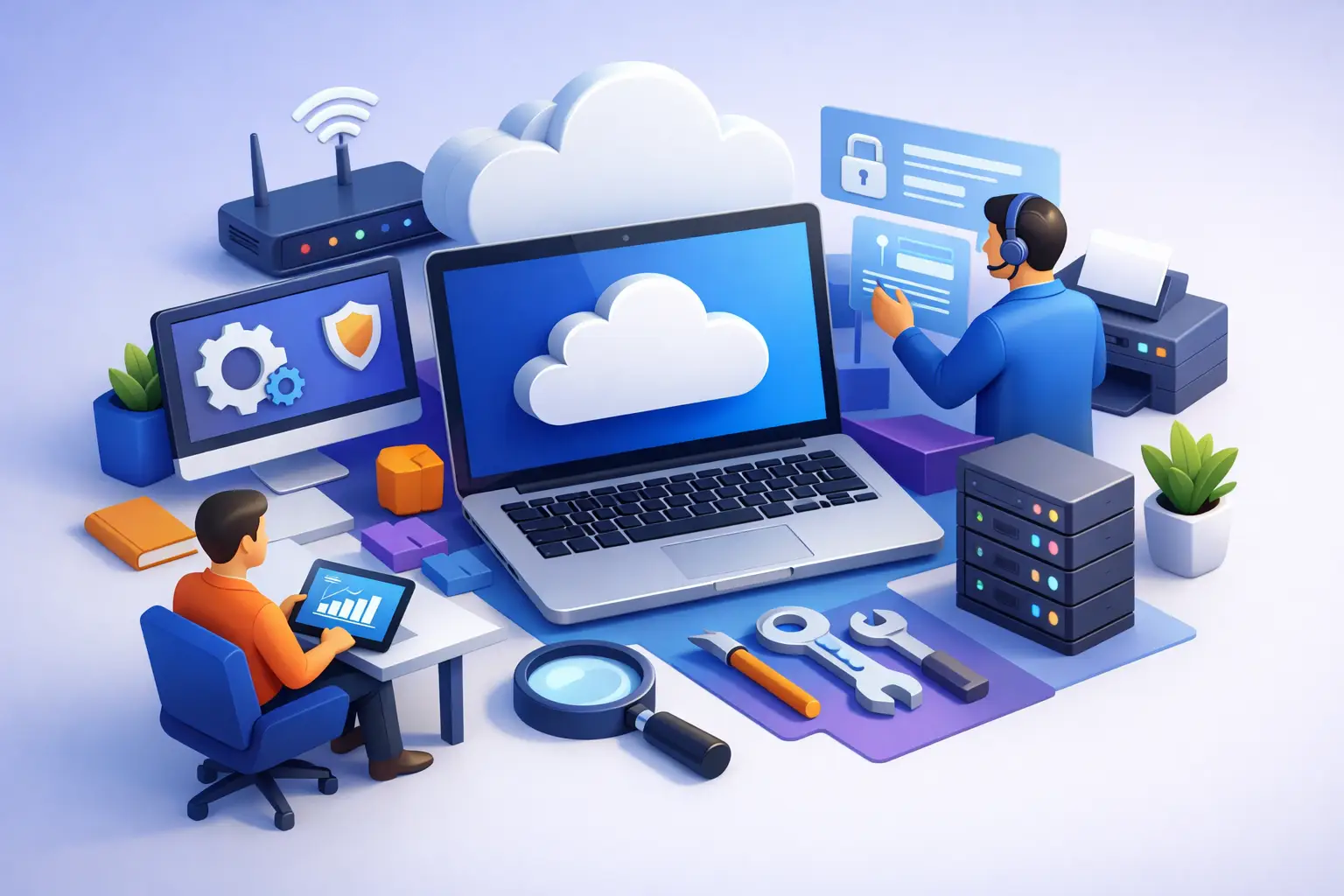
Managed IT means a provider helps monitor, maintain, secure, and support your technology on an ongoing basis instead of only showing up after a failure. That usually includes computers, user accounts, networks, Wi-Fi, printers, data backup, cybersecurity tools, software updates, and day-to-day troubleshooting.
For a small office, retail store, medical practice, service company, or local professional firm, that support can be the difference between a minor issue and a major disruption. If one employee cannot log in, a printer stops talking to the network, or malware hits a front desk PC, the problem rarely stays isolated. It spreads into billing delays, missed appointments, and frustrated customers.
Good managed IT service is not just fixing broken devices. It is watching for warning signs, patching systems before they become vulnerable, confirming backups are working, and helping you make smarter decisions when it is time to replace aging hardware.
Why small businesses struggle without ongoing IT support
A lot of owners piece together technology one purchase at a time. A router comes from one store, laptops from another, a friend sets up the Wi-Fi, and backups are handled inconsistently if they are handled at all. That approach can work for a while, especially when the company is small and everyone is used to making do.
The trouble starts when growth adds pressure. More devices connect to the network. Employees work remotely. Payment systems, printers, inventory software, cloud apps, and security cameras all depend on stable infrastructure. Suddenly the business has real IT complexity, but nobody has clear responsibility for keeping it all healthy.
That gap creates predictable risks. Password habits get sloppy. Updates are postponed. One old desktop becomes mission critical. A backup system was installed months ago, but nobody has checked whether the data can actually be restored. These are common small business problems, not rare ones.
The biggest benefits of managed IT for a small business
The first benefit is reduced downtime. When your systems are maintained on a schedule and monitored for issues, many failures can be prevented or caught early. Even when problems do happen, a business with established support gets faster help because the provider already knows the environment.
The second benefit is stronger security. Small businesses are often targeted because attackers assume protections are weaker. Basic safeguards like patch management, antivirus oversight, firewall review, account security, backup verification, and employee guidance matter a lot. You do not need enterprise-level complexity, but you do need consistency.
The third benefit is cost control. Break-fix support sounds cheaper until an outage stops sales, corrupts files, or forces a rushed replacement. Managed service usually makes expenses more predictable. It also helps businesses avoid buying the wrong equipment or stretching old hardware past the point of reliability.
Another benefit is better planning. Technology decisions are easier when someone can tell you what should be replaced this year, what can wait, and what introduces unnecessary risk. That matters for small companies where every dollar has a job.
What to expect from a local provider
A local managed IT company should do more than speak in technical jargon and send invoices. They should learn how your business actually operates. A busy front office, a retail counter, a workshop, and a professional services firm do not all need the same setup.
You want a provider that can explain issues in plain language, respond quickly when operations are affected, and support both routine maintenance and urgent problems. For many small businesses, local accountability matters as much as technical skill. It is easier to trust advice when the team understands your area, your pace of business, and the real cost of being offline for even a few hours.
That local factor is one reason many Tennessee businesses prefer working with a nearby team instead of a distant call center. If on-site help is needed for networking, printer issues, workstation failures, or new equipment installation, quick response makes a real difference.
How to tell if your business is ready for managed IT
If your business depends on computers every day, you are probably already ready. Still, a few signs make the need especially clear.
If staff members lose time to recurring tech problems, managed support can help. If cybersecurity feels confusing or inconsistent, managed support can help. If no one is sure whether backups are current, tested, and recoverable, managed support can help. The same is true if you are adding employees, opening another location, upgrading systems, or trying to support remote work without creating security gaps.
Many owners wait until a major failure forces the issue. That is understandable, but it is rarely the cheapest route. Managed service works best when it is set up before the crisis, not during it.
Choosing small business managed IT services wisely
Not every provider is a good fit for every business. Price matters, but it should not be the only factor. The lowest monthly rate may leave out critical support, slow response times, or proactive maintenance that prevents bigger losses later.
Start by asking what is actually included. Some plans focus mainly on remote monitoring and antivirus, while others cover help desk support, backup management, patching, network oversight, user support, and strategic planning. Neither model is automatically better. It depends on how much your business relies on technology and how much hands-on support you need.
You should also ask how the provider handles security standards, after-hours support, and disaster recovery. A small business may not need a complex compliance framework, but it should still expect sound practices aligned with current guidance. Clear answers here show maturity and discipline.
Communication style matters too. You need technicians who can talk to non-technical staff without making them feel lost or blamed. Good support should lower stress, not add to it.
Managed IT is not one-size-fits-all
A five-person office may only need device management, backup oversight, email security, and occasional on-site support. A growing company with multiple workstations, shared files, cloud applications, POS equipment, and guest Wi-Fi will need more structure. If your business stores sensitive client information, your security needs rise again.
That is why a practical provider starts with your environment instead of pushing the same package to everyone. The goal is not to sell the biggest plan. The goal is to cover the systems that keep your business moving and reduce the risks most likely to hurt you.
For local companies in and around Tullahoma, that usually means a blend of dependable support, straightforward pricing, and technicians who can handle everything from workstation issues to networking and cybersecurity concerns. TN Computer Medics fits that model by combining fast local service with broad technical coverage for both everyday problems and ongoing business IT needs.
A smarter way to think about IT support
The best time to improve your technology is when things are still working well enough to plan carefully. That gives you room to fix weak spots, replace aging equipment on your schedule, and put safeguards in place before a close call becomes a real outage.
Small business managed IT services are not about adding complexity. They are about removing uncertainty. When your systems are maintained, your data is protected, and help is available when you need it, you spend less time reacting and more time running your business. That kind of support does not just keep computers online. It gives your business a steadier foundation to grow on.