
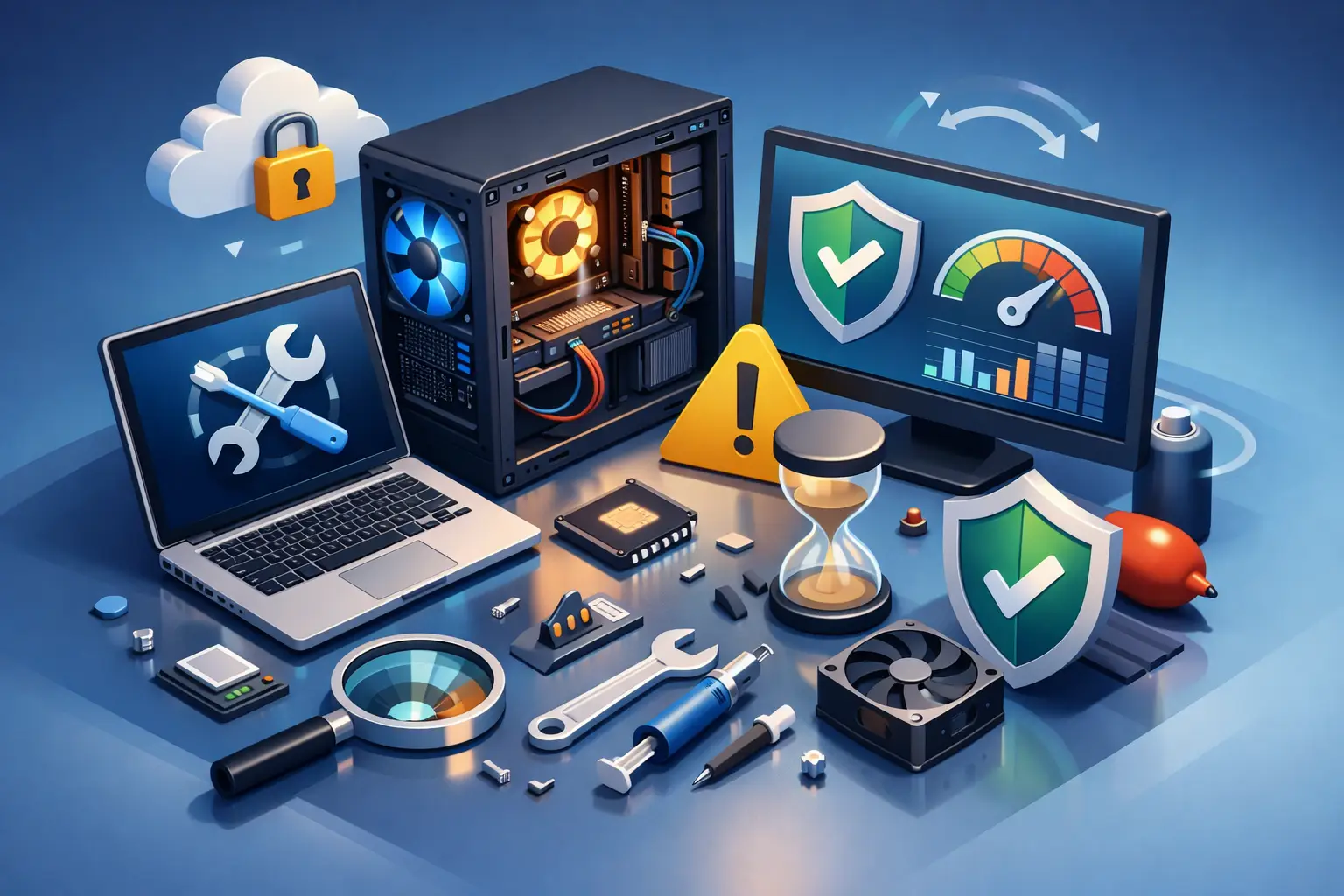
A computer rarely fails at a convenient time. It slows down during a school deadline, refuses to connect before a remote meeting, or displays a warning message when your business needs to process orders. The best PC maintenance tips are not complicated, but following them consistently can prevent lost files, security problems, and costly downtime.
For Tullahoma-area homes, remote workers, and small businesses, routine maintenance is the difference between a computer that supports the day and one that interrupts it. Focus on the habits below, and know when a problem has moved beyond a simple fix and needs professional attention.
1. Keep Windows and essential software updated
Updates can feel disruptive when they appear in the middle of work, but postponing them indefinitely creates larger problems. Windows updates correct known security weaknesses, fix bugs, and improve compatibility with newer programs and hardware. Browser, email, office, accounting, and antivirus updates matter for the same reason.
Set Windows to install updates outside your normal working hours, then restart when requested. A restart is not just a formality. It lets updates finish installing and clears temporary processes that can affect performance.
There is one exception: businesses with specialized point-of-sale software, older printers, or industry-specific programs should test major updates before deploying them across every machine. A small amount of planning can prevent a compatibility issue from stopping operations.
2. Use real backup protection, not just good intentions
A hard drive can fail without warning. So can a laptop after a drop, power surge, ransomware attack, or spilled drink. If the only copy of family photos, customer records, tax documents, or project files lives on one computer, the data is at risk.
Use automatic backups and confirm they are actually running. A practical approach keeps copies in more than one location: one on the computer, one on a separate backup drive or device, and one stored securely away from the computer. Cloud backup can be useful, but it should not be your only protection if files are synced and accidentally deleted or encrypted by malware.
Once a month, open a few backed-up files. A backup that cannot be restored is not a backup plan. Small businesses should also document who checks backups and what to do if a workstation, server, or shared drive becomes unavailable.
3. Clean up storage before the drive gets full
Computers need free storage space to install updates, manage temporary files, and run smoothly. When a drive is nearly full, programs can lag, updates may fail, and the computer may feel much older than it is.
Start with built-in storage tools to remove temporary files, old update files, and items sitting in the Recycle Bin. Then review your Downloads folder, duplicate photos, unused software, and large video files. Move files you need but do not use often to an external drive or properly managed cloud storage.
Do not delete unfamiliar system folders just to gain space. Removing the wrong files can damage Windows or break installed applications. If your computer is constantly low on space despite basic cleanup, a larger solid-state drive may be a better long-term answer.
4. Restart regularly and limit startup programs
Many people close a laptop lid every night and go weeks without restarting. Sleep mode is convenient, but it does not fully clear memory leaks, stalled background processes, or incomplete updates. Restarting once a week is a simple habit that resolves many minor issues before they become a service call.
Also check which programs open automatically when Windows starts. Too many startup apps can turn a fast computer into a slow one before you have opened a single browser tab. Keep security software and essential work tools enabled, but disable nonessential launchers, chat apps, and updaters that you do not need immediately.
Be selective. Turning off an unfamiliar service because it sounds unimportant can create new problems. When in doubt, get help rather than guessing.
5. Protect every account with strong passwords and MFA
PC maintenance is not only about the machine. Your email account, browser passwords, cloud storage, and financial logins are often more valuable to a criminal than the computer itself. Email is especially important because password reset links for other accounts usually arrive there.
Use a unique, long password for every important account and store those passwords in a reputable password manager. Turn on multi-factor authentication wherever it is available, particularly for email, banking, payroll, remote access, and business administration accounts.
Avoid approving unexpected login prompts. A message or notification that appears to come from a familiar company may still be a phishing attempt. If something feels urgent, threatening, or unusually vague, stop and verify it through a known contact method before entering credentials.
6. Treat antivirus alerts and pop-ups seriously, but carefully
A good security program, active Windows security updates, and safe browsing habits provide a strong baseline for most home computers. However, no antivirus tool can fully protect a person who is tricked into sharing a password or installing a fake update.
Never call a phone number from a pop-up claiming your computer is infected. Legitimate companies do not normally lock your screen and demand immediate payment. Close the browser if possible, disconnect from the internet if the system behaves strangely, and seek assistance if warnings continue.
For a business, endpoint protection should be paired with user training, controlled access, secure backups, and a plan for responding to an incident. Security is layered. One tool alone is not enough.
7. Keep the computer cool and physically clean
Dust is more than a cosmetic issue. It blocks fans and heat sinks, raises internal temperatures, makes fans loud, and can shorten the life of components. Pets, carpet, smoking, and busy shop environments can make buildup happen faster.
Every few months, shut the computer down completely and unplug it. Wipe the keyboard, screen, and exterior with products made for electronics. For desktop towers, use short bursts of compressed air around vents and fans while keeping the can upright. Do not use a household vacuum inside the case, and do not spray cleaner directly onto a screen or keyboard.
Make sure a desktop has breathing room around its vents. A laptop should rest on a hard, flat surface rather than a blanket or couch cushion that traps heat. If a computer overheats, shuts down, or runs its fans constantly, internal cleaning or a cooling-system repair may be needed.
8. Check cables, power protection, and battery health
Loose cables cause more trouble than people expect. A monitor that flickers, printer that goes offline, or desktop that will not start may have a simple connection or power issue. Check power cords, charging cables, network cables, and display connections before assuming a major component has failed.
Use a quality surge protector for desktops, monitors, networking equipment, and printers. In locations with frequent outages or voltage fluctuations, an uninterruptible power supply can give critical computers time to save work and shut down safely.
Laptop batteries naturally lose capacity over time. Watch for rapid battery drain, swelling, excessive heat, or a charger that only works at a certain angle. A swollen battery is a safety concern and should be handled by a technician promptly.
9. Pay attention to early warning signs
The best PC maintenance tips work best when you act early. Clicking or grinding from a hard drive, repeated blue screens, random restarts, a cracked charging port, missing files, or a computer that suddenly becomes much slower are all signs worth investigating.
Do not keep forcing a failing drive to boot if important data is on it. Continued use can make recovery more difficult. Likewise, repeated malware warnings or unfamiliar accounts on a business system should be addressed before the issue spreads to shared files or other devices.
10. Give business computers a maintenance schedule
For a small business, maintenance should not depend on whoever remembers first. Assign responsibility for updates, backups, password access, software licenses, network equipment, and replacement planning. Even a simple written schedule reduces confusion when an employee leaves, a computer fails, or a security issue occurs.
Managed IT support is especially useful when there are several workstations, shared storage, remote employees, POS systems, or customer information to protect. TN Computer Medics helps local businesses and residents address routine computer health before it becomes an emergency, with practical repair and support options that fit the equipment they rely on.
When to stop troubleshooting on your own
Basic maintenance is worthwhile, but some situations call for a qualified technician: a liquid spill, a burning smell, repeated blue screens, signs of ransomware, a swollen battery, failed storage, motherboard damage, or data that cannot be replaced. Continuing to experiment can turn a repairable issue into a larger loss.
Set aside a few minutes each month for updates, backups, cleanup, and a quick check of how your computer is behaving. That small routine protects more than a device – it protects the work, memories, customers, and daily connections stored on it.