
A stolen password can shut down a workday faster than a failed hard drive. For families, remote workers, and small businesses, that usually means locked accounts, fraud alerts, reset emails, and a lot of wasted time. The future of passwordless security matters because passwords are still one of the weakest parts of everyday tech, even when people try to do everything right.
For years, the advice has been familiar: make passwords longer, do not reuse them, turn on two-factor authentication, and store everything in a password manager. That is still better than using weak or repeated logins. But the bigger shift now is moving away from passwords altogether, or at least making them less central. That change is already showing up on phones, laptops, banking apps, and business platforms.
What the future of passwordless security really means
Passwordless security does not always mean there is no secret involved anywhere in the system. It usually means the user does not have to create, remember, or type a traditional password to sign in. Instead, access is based on something you have, something you are, or a trusted device proving your identity.
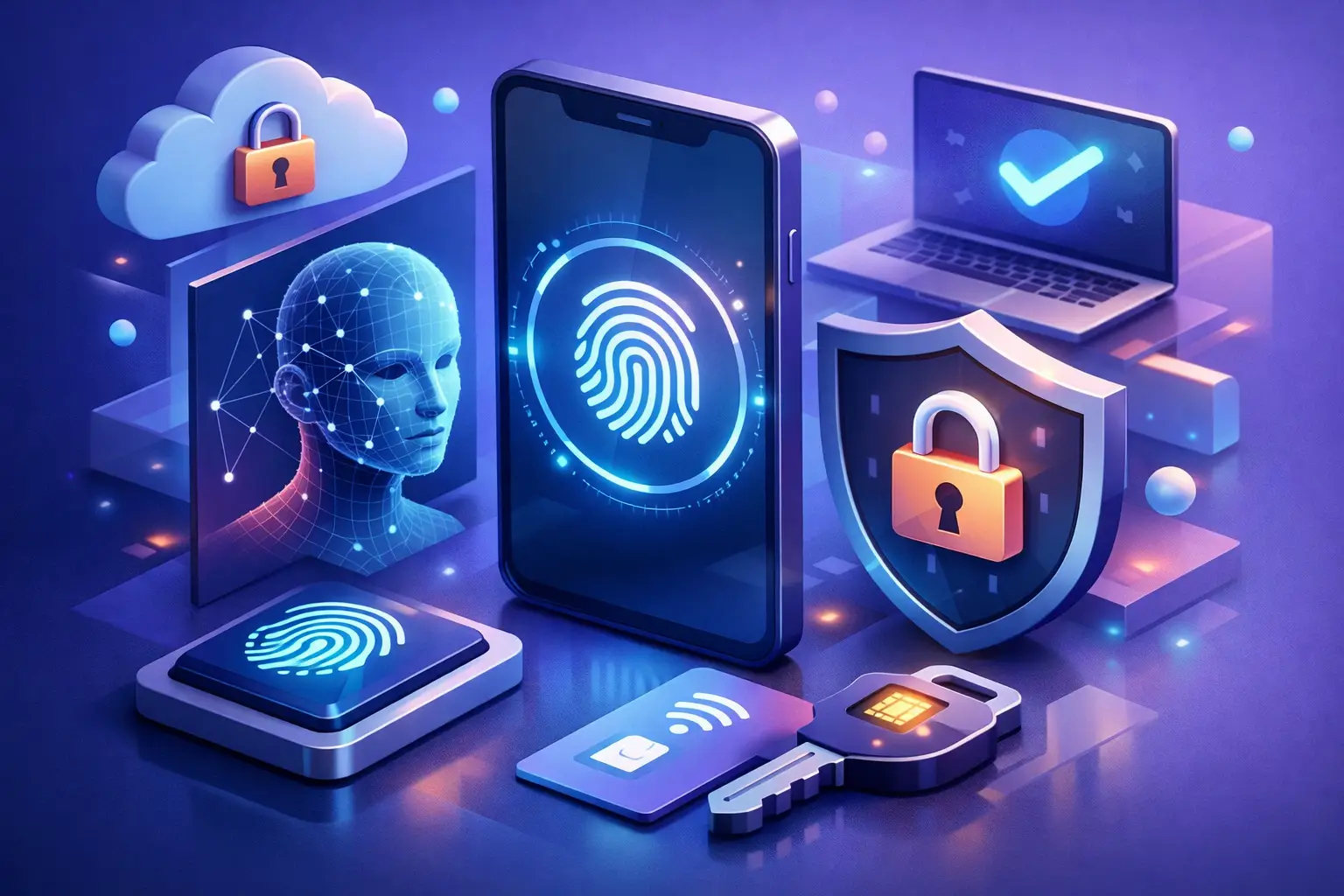
In practice, that can mean a fingerprint on a phone, Face ID on a laptop, a hardware security key, a one-time sign-in approval on another device, or a passkey stored securely on your device. Passkeys are getting the most attention right now because they are easier for users and harder for attackers to steal through phishing.
That is the real reason this matters. Most account break-ins still happen because someone is tricked into giving up a password, reuses one from an older breach, or stores it carelessly. If there is no password to type into a fake login page, one of the most common attack paths starts to disappear.
Why passwords are losing ground
Passwords have always asked too much from people. They expect users to create dozens of unique credentials, remember them under stress, update them after breaches, and somehow spot every fake login screen. That is not realistic for most households, and it is not realistic for a busy small business either.
Even well-run companies run into trouble when employees choose convenience over policy. Shared logins, weak admin credentials, and sticky-note workarounds still happen more often than many owners realize. Password rules can reduce risk, but they also create friction. Friction leads to shortcuts, and shortcuts lead to security incidents.
Passwordless tools try to reduce both risk and frustration. That is why major platforms are pushing this direction. They know people are more likely to use stronger security if it feels simple and fast.
The technologies shaping the future of passwordless security
Passkeys are likely to be the biggest driver over the next several years. A passkey uses cryptographic keys rather than a memorized password. One part stays on the user device, and the other part works with the service being accessed. When done right, that means there is no reusable password sitting on a server waiting to be stolen.
Biometrics will continue to grow, but they are not a complete security strategy on their own. Fingerprints and facial recognition are convenient, and for many users they are the reason passwordless logins feel practical. Still, biometrics usually work best as a way to unlock a trusted device or approve a secure sign-in, not as a standalone replacement for every layer of identity protection.
Hardware security keys will stay important, especially for business owners, administrators, finance staff, and anyone with access to sensitive systems. They are not as convenient for every household login, but they provide strong protection against phishing and account takeover. For higher-risk users, that trade-off is often worth it.
Device trust will also play a larger role. Systems are getting better at checking whether a sign-in request is coming from a known device, normal location, and expected behavior. That does not mean every login should be approved automatically. It means access decisions can become more intelligent, with fewer unnecessary prompts for legitimate users and more scrutiny when something looks off.
What this means for small businesses
For a small business, the future of passwordless security is less about chasing trends and more about reducing avoidable downtime. One compromised email account can lead to fake invoices, payroll fraud, customer data exposure, or ransomware getting a foothold. That can turn into a very expensive week.
Passwordless adoption can help, but only if it is rolled out carefully. Not every app a business uses will support passkeys or modern authentication methods right away. Some older software, line-of-business platforms, or legacy devices may still depend on traditional credentials. That is where planning matters.
A business may end up using a mixed environment for a while. Email and cloud services might move to passkeys and app-based approvals, while older systems still require strong passwords and multi-factor authentication. That is normal. Security upgrades do not always happen in one clean step.
The practical goal is to reduce exposure where it counts most first. Administrative accounts, email platforms, financial systems, remote access tools, and shared business applications should be at the top of the list. If those accounts are better protected, the biggest risks start coming down quickly.
Where passwordless security still has trade-offs
Passwordless security is promising, but it is not magic. People can still lose phones, replace devices, or get confused during account recovery. If recovery options are poorly set up, users can lock themselves out just as easily as they used to forget passwords.
Biometrics also raise real questions. Some users are uncomfortable using fingerprints or facial recognition, and some workplaces need to think carefully about privacy expectations and device policies. Accessibility matters too. A sign-in process should work for users with different physical needs and different comfort levels with technology.
There is also the issue of compatibility. Some websites and apps are ahead of the curve. Others are behind. Small businesses often run on a mix of new cloud services and older software that does not modernize quickly. That means passwordless security is often part of the answer, not the whole answer.
Then there is the human side. If employees do not understand how the new sign-in flow works, help desk requests go up and people try to bypass the system. Any rollout needs clear instructions, a backup plan, and support for people who are not especially technical.
How to prepare now
The smartest move is not to wait for every platform to be perfect. Start by reviewing your most important accounts and devices. If passkeys are available on email, banking, or major business platforms, they are worth serious consideration. If they are not available yet, use strong unique passwords and multi-factor authentication in the meantime.
For households, focus on the accounts that would cause the most damage if compromised. Email is usually first, because it is tied to password resets for everything else. Financial accounts, cloud storage, shopping sites with saved payment methods, and school or work accounts should follow.
For businesses, start with privileged accounts and any system tied to money, customer communication, or remote access. Review who has access, what devices they use, and how recovery works if a phone is lost or an employee leaves. Good security is not just about login strength. It is also about control, visibility, and having a plan when something goes wrong.
This is also a good time to clean up old accounts, remove shared credentials where possible, and make sure devices are updated. A modern sign-in method loses value if it is being used on an unpatched computer full of malware or connected to a poorly secured network.
The likely next step for everyday users
Over time, many people will stop thinking about passwords the way they do now. They will approve access with a face scan, fingerprint, device PIN, or trusted hardware key, and the underlying cryptography will do the harder work quietly in the background. That is likely where the future is headed, especially for major consumer and business platforms.
Still, the transition will be uneven. Some users will embrace it quickly. Others will need guidance. Some systems will support it well. Others will lag for years. That is why practical support matters. In local communities, people often need someone who can explain the options clearly, set things up correctly, and make sure stronger security does not create new problems at home or at work.
The future of passwordless security looks promising because it addresses a problem people have struggled with for years: the fact that the average person is being asked to manage too many secrets in too many places. Better security should not depend on perfect memory or perfect judgment every single day. It should make safer choices easier, and that is exactly where this shift has the most value.